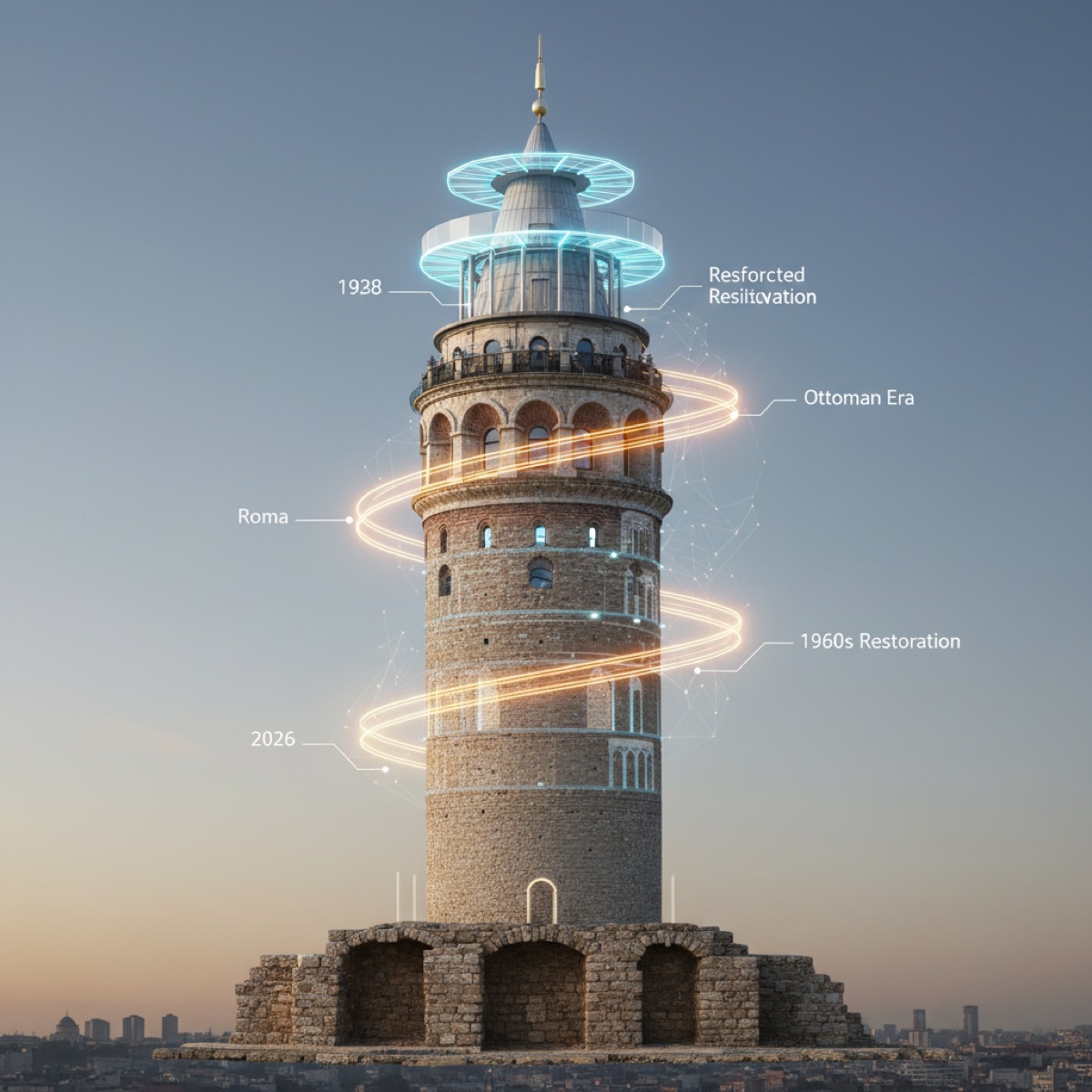
Rising as a timeless symbol in the heart of Istanbul, Galata Tower is a captivating structure, not only for its architecture but also for its deep history that continually inspires the world of Galata Tower Art. In this blog post, we will meticulously examine the history, architecture, cultural significance, and enduring impact on art of this unique structure. It still adorns the city's skyline as of 2026. Galata Tower has been a profound source of inspiration for artists throughout every period, serving as the subject of countless works and becoming an important icon reflecting the artistic spirit of Istanbul.
Galata Tower: A History Narrated Through Art
The history of Galata Tower dates back to the late Roman Empire and even to the Byzantine period. Initially built as a wooden tower, the structure was rebuilt by the Genoese in 1348, known then as "Christ's Tower." During the Ottoman Empire, the tower maintained its strategic importance, used for fire observation, as a prison, and an observatory. Consequently, each period left a distinct story and a unique touch of Galata Tower Art on the tower's walls. For a deeper dive into its historical uses, you can read about Galata Tower's role as a 'Cellar' and Storage Hub.
The Tower's Transformation from Genoese to Ottoman Eras
- Genoese Period (1348-1453): Constructed as a defensive tower for the Genoese colony, it stood as one of the tallest structures in the city, playing a vital role in controlling trade routes.
- Ottoman Period (1453-1923): After Sultan Mehmed the Conqueror's conquest of Istanbul, the tower gained new functions beyond its strategic importance. It served for many years, notably as a fire watchtower. Legends, such as Hezârfen Ahmed Çelebi's flight attempt mentioned in Evliya Çelebi's Seyahatname (Book of Travels), also belong to this period, reinforcing the mystical atmosphere of the tower. This period also saw significant contributions to Istanbul's philosophical and scientific heritage through its use as an observatory.
This rich history has, therefore, inspired many painters, writers, and poets, frequently appearing in their works, showcasing the enduring legacy of Galata Tower Art.
Galata Tower Architecture: Where Art and Engineering Converge
Galata Tower, with its height of approximately 67 meters and distinctive cylindrical architecture, stands as one of Istanbul's most striking structures. Its meticulous stonework, solid construction, and characteristic Genoese architectural features mark it as a significant engineering achievement of its era. Although the tower has undergone numerous repairs and restorations, its original architecture has been largely preserved. This unique architecture has provided many artists, from photographers to painters, with abundant opportunities to capture the aesthetic of Galata Tower Art.
Key Architectural Features of the Tower
- Stonework: The intricate stonework on the tower's exterior reveals the attention to detail and superb craftsmanship of the period.
- Cylindrical Structure: The robust cylindrical body resting on a strong foundation is a testament to the tower's centuries-defying durability.
- Panoramic View: The balcony on the top floor offers an unparalleled panoramic view of Istanbul, making it indispensable for photographers and landscape painters, especially at sunset.
Even in 2026, visitors climbing the tower continue to enjoy this unique architecture and the captivating vistas it offers. The tower is not merely an observation point but also a profound monument reflecting the artistic soul of the city, deeply connected to Galata Tower Art.
Galata Tower as a Muse in Artworks
Galata Tower has consistently been a profound source of inspiration across many art forms throughout the centuries. It has come to life in the paintings of artists, the verses of poets, the stories of writers, and the frames of photographers. This structure, now a symbol of Istanbul, has served as a mirror reflecting the city's soul and history. In the realm of Galata Tower Art, it continues to exist as both a muse carrying the traces of the past and a legacy inspiring contemporary works. You can discover more about its literary significance in "Galata Tower: A Literary Beacon."
Galata Tower in Literature and Painting
- Literature: In works such as Orhan Pamuk's "My Name Is Red," in Peride Celal's novels, and in countless poems, Galata Tower has been featured as an element reinforcing Istanbul's mysterious and magical atmosphere.
- Painting: From Sultan Mehmed the Conqueror commissioning the painter Bellini to depict Galata Tower, to today, many Turkish and foreign painters have transferred the majestic stance of the tower and the vibrant life around it to their canvases. Specifically, Galata Tower is frequently seen in the works of 19th-century orientalist painters. For an interesting perspective on how historical structures are depicted, insights from the Metropolitan Museum of Art's essay on European Orientalism can be enlightening.
In contemporary art today, Galata Tower is also approached with diverse interpretations and multidisciplinary approaches. From digital art pieces to installations, the iconic silhouette of the tower consistently nourishes the creativity of artists. Thus, Galata Tower Art is deeply intertwined with art itself.
Contemporary Art and Galata Tower: The 2026 Perspective
As we arrive in 2026, Galata Tower still stands at the center of artistic events and cultural gatherings. The streets surrounding the tower host boutique art galleries, handicraft workshops, and performances by street artists. The tower itself occasionally becomes a dynamic venue for light shows, video mapping projects, and contemporary art installations. This further strengthens its intrinsic connection with Galata Tower Art. The evolving nature of urban art can be further explored through resources like Street Art's official website.
The Artistic Spirit Surrounding Galata Tower
- Art Workshops: The narrow streets around the tower host workshops offering a wide range of activities, from traditional handicrafts to modern art. Tourists can both purchase artworks and observe the production processes firsthand.
- Street Art: Graffiti and mural artists skillfully combine the historical texture of the tower with their modern art, adding a vibrant, dynamic atmosphere to this area.
- Digital Art Projects: On special days or during festivals, the exterior of the tower transforms into a monumental canvas for digital art projects, offering spectacular visual feasts. For examples of large-scale digital art, you might consult The Museum of Modern Art's digital art collection.
Galata Tower, as it was in the past, continues to be a major attraction for artists and art lovers today. This historical structure has successfully become an integral part of Istanbul's continuously evolving artistic identity by blending the old with the new, and the traditional with the modern. Indeed, Galata Tower Art is an indispensable benchmark for the art world. Visitors can both delve into the depths of history and encounter the dynamic face of contemporary art here.
Still actively welcoming visitors, the tower maintains its status as one of Istanbul's most popular tourist and artistic venues in 2026, offering its unique view and lively cultural environment, a true testament to Galata Tower Art.