Galata Tower Height, Size & Quick Facts
How Tall Is Galata Tower?
Galata Tower stands approximately 66.9 metres tall — a figure most sources round to about 67 metres. That measurement is taken from the base of the stone cylinder to the tip of its pointed conical roof. But the raw height only tells part of the story: the tower was deliberately built on top of a hill in the Galata (Karaköy/Beyoğlu) district, so the top of the tower sits roughly 140 metres above sea level.
That hilltop position is the secret behind the tower's legendary views. Even though the structure itself is "only" about 67 metres, its elevated setting means that from the observation balcony you look down over the Golden Horn, across to the historic peninsula with its domes and minarets, and out along the Bosphorus toward the Asian side of the city. Height plus elevation equals one of the best panoramas in Istanbul.
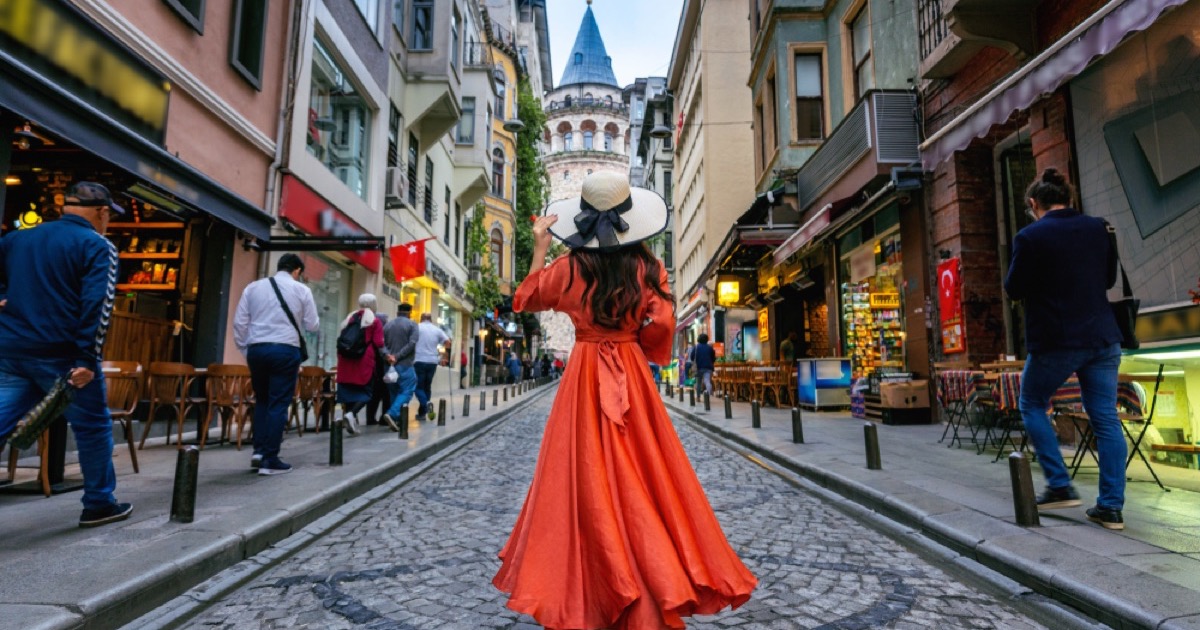
Quick Facts
| Feature | Detail |
|---|---|
| Height | ~66.9 m (commonly cited as ≈67 m) |
| Floors | 9 |
| Outer diameter | ~16.45 m |
| Inner diameter | ~8.95 m |
| Wall thickness | ~3.75 m |
| Elevation of top | ~140 m above sea level |
| Year built | 1348 |
| Builder | The Genoese ("Christea Turris") |
| Visitors per year | ~3 million |
| Reopened as museum | 2020 |
The Dimensions in Detail
Galata Tower is a cylindrical stone tower capped by a conical roof. Its proportions are as impressive as its height:
- Outer diameter: ~16.45 m. The wide, drum-like base gives the tower its solid, unmistakable silhouette on the skyline.
- Inner diameter: ~8.95 m. This is the usable interior space, wrapped by a spiral of floors and a modern elevator core.
- Wall thickness: ~3.75 m. Subtract the inner diameter from the outer and you find walls nearly four metres thick at the base. This enormous mass of masonry is precisely why the tower has survived nearly seven centuries of earthquakes, fires and storms.
The conical cap that gives the tower its familiar pointed profile is not original. The Genoese tower had a different, flatter top; the tall pointed roof is a later addition from the Ottoman period, part of a long history of repairs and modifications. For more on how the building was engineered and altered over time, see our architecture guide.
Making the Height Tangible
Numbers on a page can feel abstract, so here is a way to picture it: at roughly 67 metres, Galata Tower is about as tall as a 20-storey modern building. Imagine a 20-floor apartment block built entirely of thick grey stone, standing alone on a hilltop with nothing around it rising even close to the same height — that is essentially what medieval visitors saw.
The nine interior floors do not correspond to the twenty "storeys" of a modern building, because each level inside the tower has a generous ceiling height and the thick walls take up space. The floors house museum exhibits, and the top level opens onto the circular observation balcony. To learn what you will find on each level, read about what's inside the tower.
Why It Dominated the Medieval Skyline
When the Genoese completed the tower in 1348, they named it Christea Turris — the Tower of Christ. It was the high point of the fortified walls that ringed their trading colony of Galata, across the Golden Horn from the Byzantine city of Constantinople.
At nearly 67 metres, and perched on a hill that lifts it another 70-plus metres above the water, the tower was by a wide margin the tallest structure in the whole area. Nothing else — not the surrounding houses, not the city walls, not even most churches — came close. From the sea, from the opposite shore, from the ships arriving to trade, the tower was the first thing you saw and the last thing you lost sight of. It functioned as a watchtower, a fire-lookout and a statement of Genoese power all at once.
That dominance is why the tower became such an enduring symbol of Istanbul. For centuries it was, quite literally, the thing you could always see. Today, even surrounded by a dense modern city, its silhouette still commands the Beyoğlu skyline — and around three million visitors a year climb it to enjoy the view from the top. To understand the full sweep of that story, see our history of Galata Tower.
Planning Your Visit
If reading about the dimensions has you wanting to experience the height for yourself, the tower is open every day from 08:30 to 23:00, and the 2026 admission price is €30 for foreign visitors (₺650 for Turkish citizens). For full details on prices, discounts and the best times to go, see our complete guide to Galata Tower tickets.
Quick Facts (Short Summary)
A tight, homework-ready summary of Galata Tower:
- What: a medieval stone watchtower, now a museum
- Where: Galata quarter, Beyoğlu district, European side of Istanbul
- Built: 1348, by the Genoese (originally "Christea Turris", the Tower of Christ)
- Height: ~66.9 m (≈67 m); top ~140 m above sea level
- Floors: 9, with an elevator and a 360° observation balcony
- Width: ~16.45 m outer diameter, walls ~3.75 m thick
- Who built it & why: the Genoese, as the high point of their fortified Galata colony
- Why famous: panoramic views, the Hezarfen flight legend, and its iconic Istanbul silhouette
Frequently Asked Questions
How tall is Galata Tower?
Galata Tower is approximately 66.9 metres tall, a figure commonly rounded to about 67 metres. Because it was built on a hilltop in the Galata district, the top of the tower sits roughly 140 metres above sea level, which is why the views over the Golden Horn and Bosphorus are so commanding.
How many floors does Galata Tower have?
Galata Tower has 9 floors. Visitors ride an elevator to the upper levels, where a museum and the famous 360-degree observation balcony await. The balcony on the top floor offers panoramic views of Istanbul's historic peninsula, the Bosphorus and the Asian side.
How wide is Galata Tower?
The tower has an outer diameter of about 16.45 metres and an inner diameter of roughly 8.95 metres, which means the stone walls are approximately 3.75 metres thick. This massive masonry is one reason the medieval structure has survived earthquakes and fires for nearly 700 years.
When was Galata Tower built and how tall was it originally?
Galata Tower was built in 1348 by the Genoese as 'Christea Turris' (the Tower of Christ). Its original height was similar to today, though the pointed conical cap you see now is a later Ottoman-era addition. It reopened as a museum in 2020 after restoration.
Galata Tower in short — what are the key facts?
Galata Tower is a stone watchtower in the Galata quarter of Beyoğlu, Istanbul. It was built by the Genoese in 1348, stands about 66.9 metres tall and has 9 floors. It served as a fire-watch tower under the Ottomans and reopened as a museum in 2020. Today it is one of Istanbul's most recognisable landmarks.
Is Galata Tower taller than a modern building?
At roughly 67 metres, Galata Tower is comparable to a 20-storey modern building. In the medieval period this made it the tallest structure in the city and a dominant landmark visible from across the Golden Horn — a role it held for centuries.