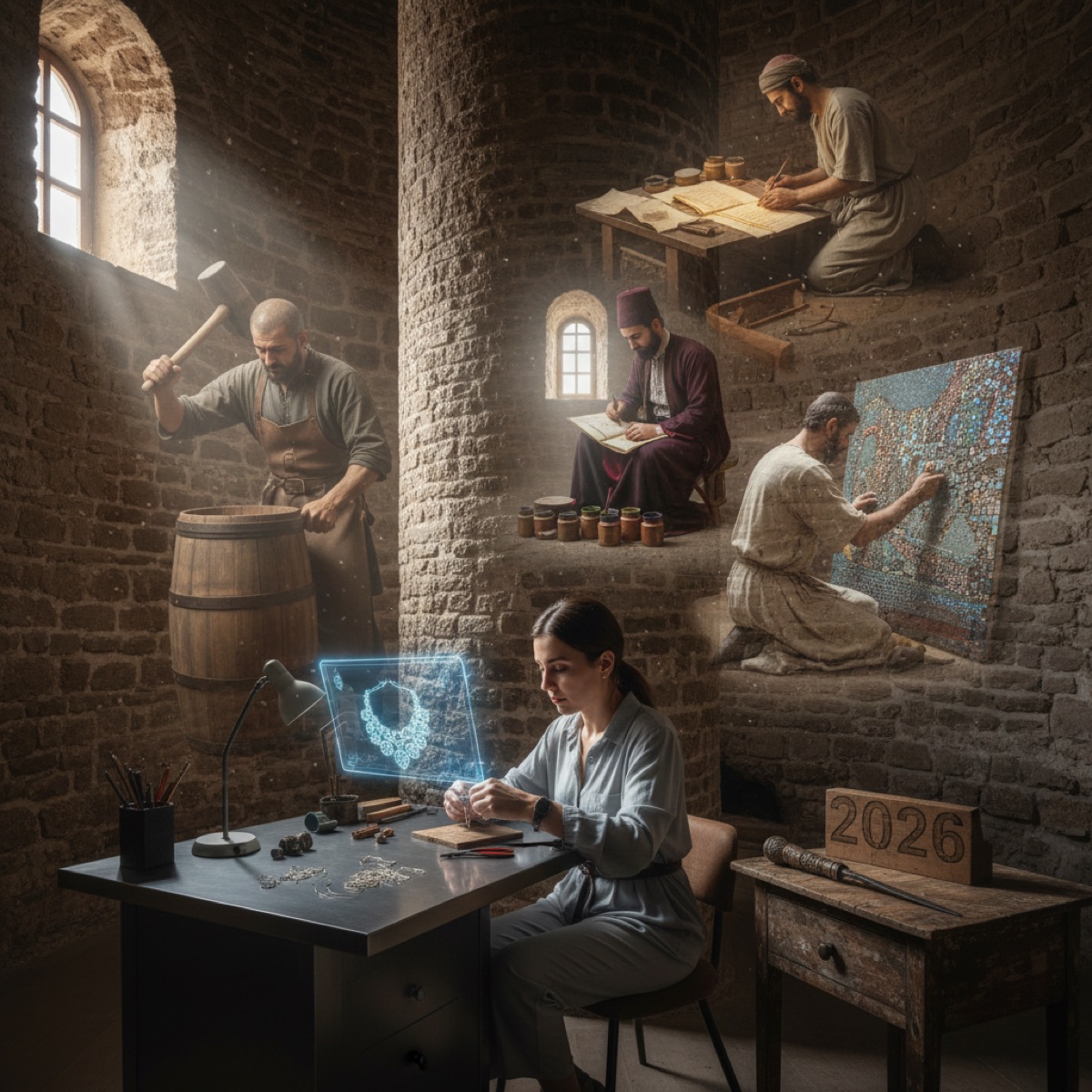
Rising in Beyoğlu, one of Istanbul's ancient districts, with a stance that defies centuries, the Galata Tower is more than just a monument or observation deck; it attracts attention with its rich history and cultural heritage. The enduring tradition of Galata Tower craftsmanship has manifested itself in many different fields throughout the tower's history, becoming a center of mastery and handicrafts. In this article, we will deeply examine the artisan spirit associated with the tower, its journey from past to present, and its significance as of 2026, highlighting the remarkable Galata Tower craftsmanship that defines it.
Historical Depths of Galata Tower and its Artisan Heritage
Throughout its long history, from the Byzantine period to the Ottoman Empire, and then to the Republic, the Galata Tower has gained a unique place in the city's skyline. However, behind its magnificent appearance lies the sweat and mastery of countless artisans who built, repaired, and kept it alive. Behind every stone, every arch, and every restoration, there are traces of the Galata Tower craftsmanship understanding of the best masters of their time. This rich heritage of Galata Tower craftsmanship is a testament to human ingenuity.
Architectural Craftsmanship from the First Construction to the Present
- Genoese Period (1348): The original structure of the tower was built during the Genoese period as a stone-fortified watchtower for defense purposes. The stonework and engineering of this period formed the fundamental solidity of the tower, showcasing early Galata Tower craftsmanship.
- Ottoman Period Restorations: With the conquest by the Ottoman Empire, the tower took on different functions and underwent repair many times. Weakened by fires, earthquakes, and the destructive effects of time, the tower was rebuilt through the skillful hands of architects and stonemasons. During these restorations, the material and technical knowledge of the period were of great importance to the ongoing Galata Tower craftsmanship.
- Republican Period Works: Extensive restorations carried out in the 20th century ensured that the tower reached its current form. During this process, alongside modern engineering knowledge, traditional handicrafts were also used to preserve the original texture of the structure, continuing the legacy of Galata Tower craftsmanship.
The Evolution of Galata Tower: Functions and Craftsmanship
Throughout history, the Galata Tower did not remain merely a watchtower; it was used for a variety of purposes in different periods, such as a dungeon, fire tower, and even a meteorological station. Each of these uses allowed for the development of different craft branches within and around the tower. Especially during the Ottoman period, the area around the tower became one of the lively centers of trade and handicrafts. This constant evolution fostered diverse forms of Galata Tower craftsmanship. You can learn more about its varied roles in Galata Tower: An Unknown Water Tower – Istanbul's Water Management and Hidden Infrastructure Stories from the Past to 2026.
Galata Tower Craftsmanship and Social Interaction
Beyond being merely a physical structure, the tower interacted with the surrounding community, becoming a center of craftsmanship and production. The dynamic structure of the Beyoğlu and Galata region created a fertile ground for people from different nations and cultures to come together around the tower and exchange knowledge and skills. This further enriched the Galata Tower craftsmanship tradition, making it a melting pot of artistic expression.
Trade and Workshops Around the Tower
The Galata region has historically been a center of trade and craftsmanship. Bazaars and workshops located at the foot of the tower ensured the economic vitality of the region. Many masters, such as blacksmiths, coppersmiths, carpenters, tailors, and jewelers, practiced their arts in the shadow of the tower, meeting the needs of both the local population and foreigners visiting the city with the products they produced. Even in 2026, traces of this spirit can be seen in the narrow streets of Galata, a testament to enduring Galata Tower craftsmanship.
Hezarfen Ahmet Çelebi's Flight and the Courage of Craftsmanship
One of the most legendary stories that comes to mind when thinking of the Galata Tower is Hezarfen Ahmet Çelebi's flight with wings from here in the 17th century. This event is not just a show of courage, but also an example of the advanced engineering and craftsmanship knowledge of the period. Hezarfen's design, construction, and successful flight of his wings demonstrate an artisan's problem-solving ability and artistic perspective. This story is one of the most prominent examples of the Galata Tower craftsmanship spirit. For more on the historical context, see Hezarfen Ahmet Çelebi's audacious flight.
Galata Tower in 2026: A Living Museum and Contemporary Craftsmanship
Today, Galata Tower is not just a tourist attraction but also a living cultural symbol bearing the traces of the past. As of 2026, the tower welcomes visitors as a structure equipped with modern technologies but preserving its soul. The craftsmanship tradition continues to be kept alive in different forms, showcasing the ongoing legacy of Galata Tower craftsmanship.
Souvenirs and Local Products
Boutiques and workshops around the tower offer modern products inspired by traditional Turkish handicrafts. Tiles, ceramics, handmade jewelry, traditional fabrics, and wood carvings offer visitors to Galata Tower alternatives that are both commemorative and support local artisans. This plays an important role in transmitting the Galata Tower craftsmanship tradition to new generations. You can find out more about contemporary Turkish arts and crafts on the Go Türkiye culture page.
Restoration and Conservation Works
Carrying the tower into the future requires continuous and meticulous restoration and conservation work. These works are carried out by expert restorers and artisans who meticulously examine the traces of the past and combine traditional techniques with modern science. This is a vital process that preserves the architectural integrity of the tower while also continuing its artisan heritage and the spirit of Galata Tower craftsmanship.
Galata Tower and Behind the Veil of Unknowns: Stories and Legends of Craftsmanship
Throughout its history, the Galata Tower has also contained many secrets and unknowns. These secrets, turning into legends and stories around the tower, have also nourished the Galata Tower craftsmanship tradition. The mysterious atmosphere of the tower has been a source of inspiration for artists and writers, further embedding the concept of Galata Tower craftsmanship into its narrative.
Legendary Residents of the Tower
- Spiritual Beings: According to some popular beliefs, the spirits of old artisans and prisoners roam the tower. These stories reinforce the mystical atmosphere of the tower, connecting it to the historical Galata Tower craftsmanship.
- Love Legends: One of the best-known legends about the tower is the belief that couples who go up it together for the first time will marry. This legend has made the tower a romantic symbol. For more on the legends and historical narratives, explore the legends of Galata Tower.
These stories and legends enhance the cultural value of the tower and further enrich the visitors' Galata Tower experience, highlighting the enduring spirit of Galata Tower craftsmanship.
Conclusion: The Revival of the Galata Tower Craftsmanship Spirit
The Galata Tower continues to be one of Istanbul's iconic structures in 2026. Behind its mighty stance lies a Galata Tower craftsmanship tradition that has continued for centuries. From the day it was built to the present, the labor and mastery of artisans can be felt in every stone, every repair, and the life around it. This heritage has ensured that the tower is not just a physical structure, but also a living center of history, culture, and art. Visitors come here both to follow the traces of the past and to witness the products of modern artisans. The Galata Tower, like a time capsule, will continue to whisper stories of craftsmanship from past to present, celebrating the timeless spirit of Galata Tower craftsmanship.