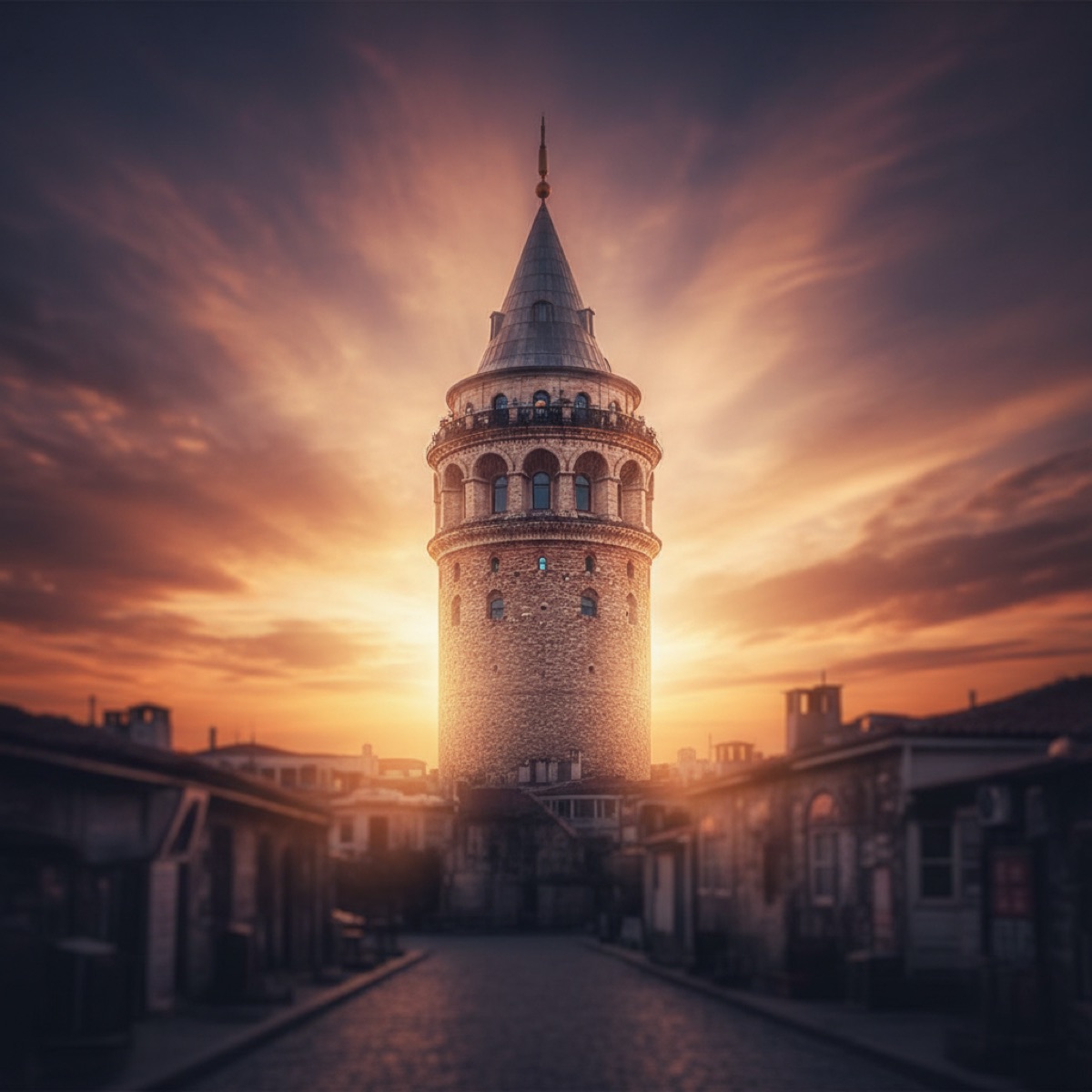
Galata Tower: Secrets and Legends of History
Adorning Istanbul's skyline, defying centuries, and holding a different story in each of its stones, the Galata Tower is one of the city's most iconic structures. This unique edifice is more than just an observation tower; it has witnessed many civilizations over centuries, been the subject of countless legends, and become an indispensable part of Istanbul's cultural heritage. In this article, we will take a detailed look at the deep history of the Galata Tower, the mysterious legends surrounding it, and its current significance.
Meta Description: Discover the fascinating history, legends, and architectural secrets of Istanbul's iconic Galata Tower. Explore everything you've wondered about this ancient structure.
Origins and Architectural Structure of the Galata Tower
The history of the Galata Tower dates back to 507 AD. It is believed to have been built as a lighthouse by Byzantine Emperor Anastasius. However, it acquired its current form when it was rebuilt by the Genoese in 1348 under the name "Tower of Christ." Thanks to its strategic location, it was of vital importance to the Genoese, controlling the entrance to the Golden Horn and observing merchant ships.
The tower's architecture bears the typical characteristics of medieval European military structures. Its height, diameter, and stonework are considered one of the engineering marvels of its time. During the Ottoman Empire, it was used for various purposes, serving as a fire tower, a dungeon, and an observatory. Additions and restorations made in each period have shaped the tower's unique appearance today.
Reconstruction and Functions of the Tower
Rebuilt by the Genoese in the 14th century, the tower was one of the tallest structures in the city at that time. Thanks to its thick stone walls and robust construction, it has largely survived earthquakes and natural disasters to this day. During the Ottoman period, its use primarily for fire surveillance played a significant role in the frequent major fire disasters Istanbul experienced. "Köşkerler" or "fire watchers" stationed in the tower constantly monitored the city, detecting and reporting potential fires early.
Furthermore, the anecdote of Hezarfen Ahmed Çelebi flying from the Galata Tower to Üsküdar with wings, as mentioned in Evliya Çelebi's Seyahatnâme (Book of Travels), is one of the most well-known stories reinforcing the tower's legendary dimension. This event has made the tower more than just a structure, transforming it into a symbol inspiring humanity's dreams and desire for exploration.
Legends and Stories of the Galata Tower
The Galata Tower has been home to countless legends and stories over centuries. These legends further enhance the tower's mysterious atmosphere, stimulating visitors' imaginations.
The Legend of Hezarfen Ahmed Çelebi
One of the most famous legends belongs to Hezarfen Ahmed Çelebi, an Ottoman scholar who lived in the 17th century. According to the روایت, Hezarfen, with wings he made himself, jumped from the Galata Tower, crossed the Bosphorus, and flew to Üsküdar. This event is considered one of the first successful human flight attempts in history and holds an important place in Turkish aviation history. This daring attempt helped the tower become not just an observation point, but also a symbol of humanity's desire to push boundaries.
This legend symbolizes both scientific curiosity and individual courage. Hezarfen's story shows that the tower is more than just a physical structure; it represents the human spirit's desire for freedom and exploration.
The Lovers' Legend
Another popular legend of the Galata Tower is related to love. According to the legend, a couple who ascends the Galata Tower together for the first time is destined to marry. However, it is said that a person who has previously ascended the tower alone will not be affected by this charm. This legend is particularly popular among young lovers and is one of the reasons many couples visit the tower. In this respect, the tower has become one of Istanbul's romantic symbols.
This legend shows that the tower not only holds historical and architectural value but is also a place full of hope and dreams that strengthens people's emotional bonds.
The Mysterious Tunnel Legend
Some local legends speak of a secret tunnel extending from beneath the Galata Tower to Hagia Sophia. This tunnel is believed to have been used as an escape route for the imperial family or important figures during the Byzantine period. Although there is no concrete evidence for this legend, it is an interesting story that reinforces the mysterious aura around the tower. Such legends increase curiosity about the tower's deep history and unknown aspects.
This mysterious tunnel legend shows that the tower captivates people not only with its visible facade but also with the secrets it hides in its depths.
Current Significance of the Galata Tower
Today, the Galata Tower is one of Istanbul's most popular tourist attractions. Visitors can enjoy panoramic views of Istanbul from the top of the tower, observing the historical texture and the enchanting beauty of the Bosphorus. The tower also hosts cultural events, exhibitions, and special organizations.
The Galata district surrounding the tower has a vibrant atmosphere filled with art galleries, boutique shops, cafes, and restaurants. This has made the area around the tower an attractive center that combines Istanbul's modern and historical fabric. The Galata Tower is more than just a point of visit; it is a symbol reflecting the spirit and character of Istanbul.
Restorations and Conservation Efforts
The Galata Tower has undergone numerous repairs and restorations over centuries. Extensive restoration work in recent years has preserved the tower's historical texture, making it safer and more accessible for visitors. These efforts are of great importance for passing the tower on to future generations. Archaeological research conducted during restorations has also revealed new information about the tower's past.
These restoration efforts demonstrate how valuable the tower is, not only as a tourist attraction but also in terms of preserving cultural heritage and passing it on to future generations.
Cultural and Artistic Impact
The Galata Tower is more than just a historical structure; it has also been a source of inspiration for artists, writers, and poets. It has appeared in many works and been the subject of songs and poems. As a symbol of Istanbul, it holds an important place in the city's artistic and cultural life. The tower's enchanting silhouette is also a favorite subject for photographers and painters.
This artistic impact proves that the tower is not just a pile of stones but an inspiring entity that touches the human soul.
Conclusion
The Galata Tower is not merely a stone structure; it is the living history of Istanbul, a monument woven with legends, and a mirror reflecting the city's soul. In its long history, stretching from Byzantium to the Ottomans, from the Genoese to the present day, it has witnessed many events and accumulated countless stories. From Hezarfen's daring flight to the wishes of lovers, each legend reinforces the tower's mysterious and captivating atmosphere.
Today, the Galata Tower not only offers its visitors a magnificent view but also takes them on a journey into the depths of the past. A must-see for anyone visiting Istanbul, the Galata Tower will continue to exist as a timeless symbol beating in the heart of the city. This unique structure holds invaluable historical and cultural significance and will continue to inspire future generations.