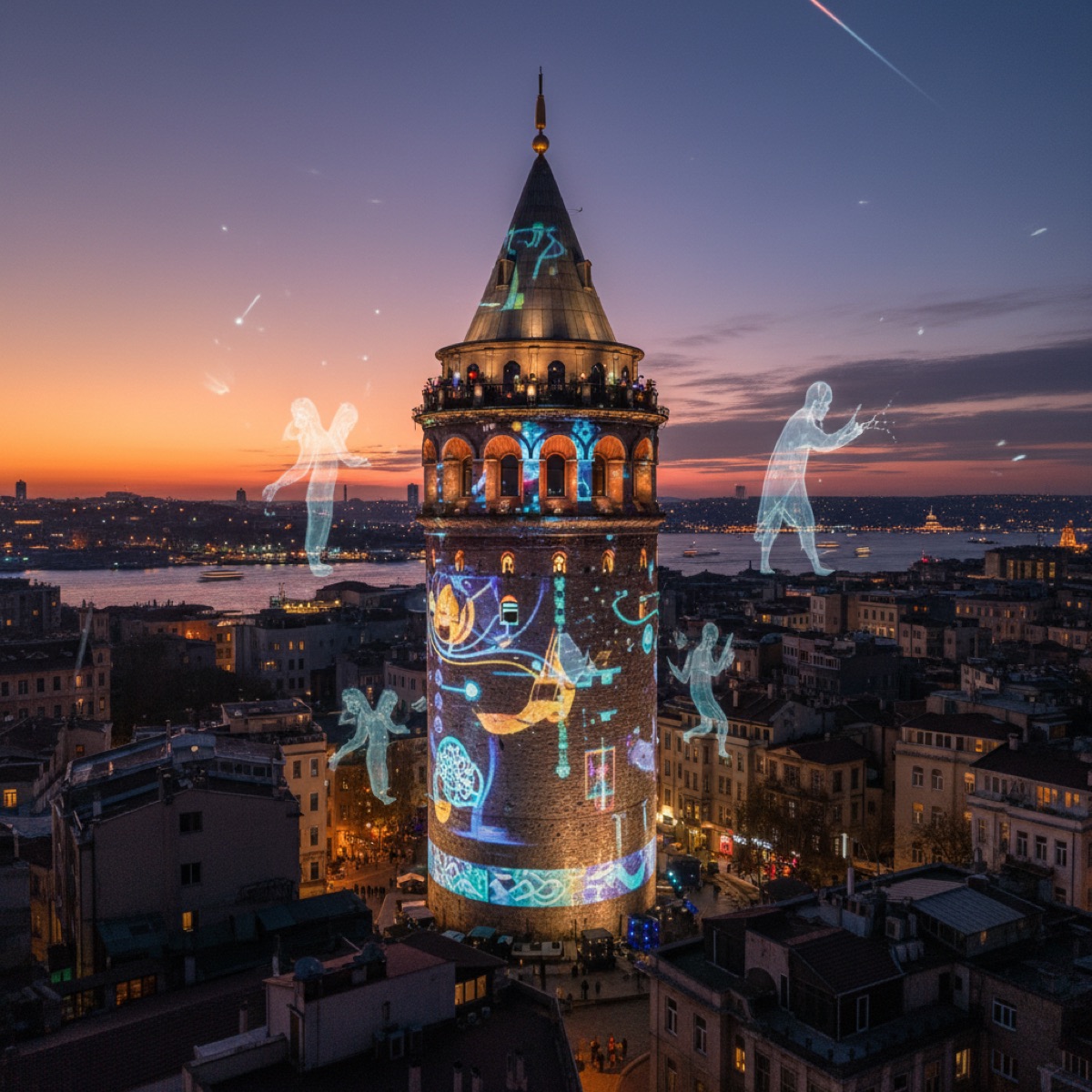
Dominating Istanbul's skyline, the centuries-old witness, the Galata Tower, possesses a rich cultural heritage beyond being merely a watchtower and fire tower. Especially, the Galata Tower Music History is a story waiting to be discovered, filled with sounds echoing within the walls of this magnificent structure. As we arrive at the year 2026, the impact of this unique structure on music and its deep connection with it continue to be a great curiosity for visitors. The rich Galata Tower Music History is a testament to its enduring cultural significance.
Galata Tower's Deep-Rooted Relationship with Music
Throughout its long history, from the Byzantine era to the Ottoman Empire, and from there to the modern Republic of Turkey, the Galata Tower has been used for many different purposes. However, the tower has always been a part of the social and cultural life around it, especially frequently intersecting with the sound of music. The religious ceremonies, festivities, and celebrations of the communities living in the areas near the tower were adorned with melodies reaching up to the tower. This deep connection forms a significant part of the Galata Tower Music History.
The Galata area has been known as a crossroads for centuries, due to its multicultural structure. This diversity has also enriched the music scene in the region. The tower has been a passive but magnificent witness to this entire musical mosaic. To delve deeper into its historical impact, read about Galata Tower: Silent Witness Through Centuries.
Musical Eras: From Byzantine Hymns to Ottoman Melodies
Melodies from the Byzantine Era
The original structure of the Galata Tower, built during the Byzantine period, witnessed the empire's magnificent ceremonies and church rituals. At this time, church music and Byzantine hymns were an important part of the soundscape of the Galata region. The tower was not indifferent to the echoes of these hymns and religious rituals, contributing to the early chapters of Galata Tower Music History.
The Tower and Sema Rituals in the Ottoman Empire
During the Ottoman period, the Galata region became an important cultural center with its Mevlevi lodge. The sounds of ney rising from the Galata Mevlevihanesi and the rituals accompanied by whirling dervishes reached the foot of the Galata Tower. The tower, in the shadow of this spiritual music, contributed to the mystical atmosphere of Istanbul. The musical history of Galata Tower gained a deeper and more mystical dimension during this period. For an artistic perspective, explore Galata Tower: Behind the Scenes of an Artistic Manifesto.
Galata Tower Music History: A Crossroads of Entertainment and Art
The area where the Galata Tower is located has made a name for itself not only with religious ceremonies and rituals but also with entertainment and artistic activities. Especially in the 19th and 20th centuries, taverns, theaters, and concert venues around the tower marked the vibrant music life of the region. The tower served as both a backdrop and a silent listener to the fasil ensembles, tavern songs, and orchestral sounds spilling from these venues, enriching the Galata Tower Music History.
Today, modern festivals and events are organized around the Galata Tower, thus continuing the relationship between the tower and music. International music festivals and street artists' performances bring old and new sounds to the tower.
Music and the Tower in the Republican Era
As Istanbul's cultural life was reshaped during the Republican era, the area around the Galata Tower also shared in this change. With urbanization, new entertainment venues, cinemas, and jazz clubs opened, increasing the musical diversity around the tower. The tower witnessed both the classical works of Turkish classical music and the new currents of Western music, further adding to the diverse Galata Tower Music History. Find out more about its broader cultural significance in Galata Tower: A Bridge of Education and Civilization.
- Jazz clubs and bars: Jazz notes spreading through the streets of Galata.
- Şark coffee houses: The melancholic tunes of Turkish music.
- Street musicians: Impromptu performances, a lifeline of the region in every era.
The Legendary Sounds and Unknowns of Galata Tower
Like every historical structure, the Galata Tower is full of its own legends and mysteries. Some of these legends offer interesting stories about the tower's relationship with music. For example, there are beliefs that the hums emitted by the tower on windy nights are the melodies of spirits from the past. Such stories add a mystical dimension to the musical history of Galata Tower.
The tower itself, due to its architecture, is also acoustically interesting. The high ceilings and circular structure of the interior allow sound to reverberate and create a special acoustic environment. Perhaps this feature increased the tower's aptitude for music throughout the centuries, making its Galata Tower Music History even more profound.
Furthermore, old recordings or artifacts uncovered during the tower's restoration work may shed light on musical activities in past periods. Such discoveries could unearth previously unknown musical stories of the Galata Tower in 2026 and beyond. To understand its deeper geological roots, see Galata Tower: A Geological Odyssey.
Acoustic Features of the Tower
The round form and thick stone walls of the Galata Tower create a unique acoustic inside. This makes it a natural concert hall for music performances, especially those held in exhibitions or special events within the tower. Experiencing how sound propagates within these walls offers an unforgettable experience for visitors, highlighting a unique aspect of Galata Tower Music History.
Legends and Folkloric Music
The legends told around the Galata Tower have also inspired folkloric music and songs. The tower's skyward presence has given rise to many songs about loves, separations, heroism, and sorrows. These works consolidate the tower's place in cultural memory, while also strengthening the musical history of Galata Tower at the grassroots level. For a broader context, consider the tower's role as a UNESCO World Heritage site.
Galata Tower's Current Musical Role and Legacy
Today, the Galata Tower serves as a museum and welcomes millions of local and foreign tourists every year. However, beyond being just a museum, it occasionally hosts special concerts, music performances, and artistic events. The tower offers a historically intertwined, inspiring stage for modern artists, continuing its rich Galata Tower Music History.
As one of Istanbul's most popular tourist attractions, the tower continues to be an important stop for music festivals and cultural events in the city. In 2026, visitors to the tower frequently encounter performances by street artists and musicians around the tower. This keeps the Galata Tower's connection with vibrant musical life current. For more on contemporary cultural life, check out the official Istanbul cultural portal.
In conclusion, the musical history of Galata Tower is a rich and multi-layered story shaped at the intersection of different cultures, religions, and art movements over centuries. The tower is not only an architectural marvel but also a silent yet magnificent bearer of Istanbul's musical soul, with its Galata Tower Music History echoing through time.