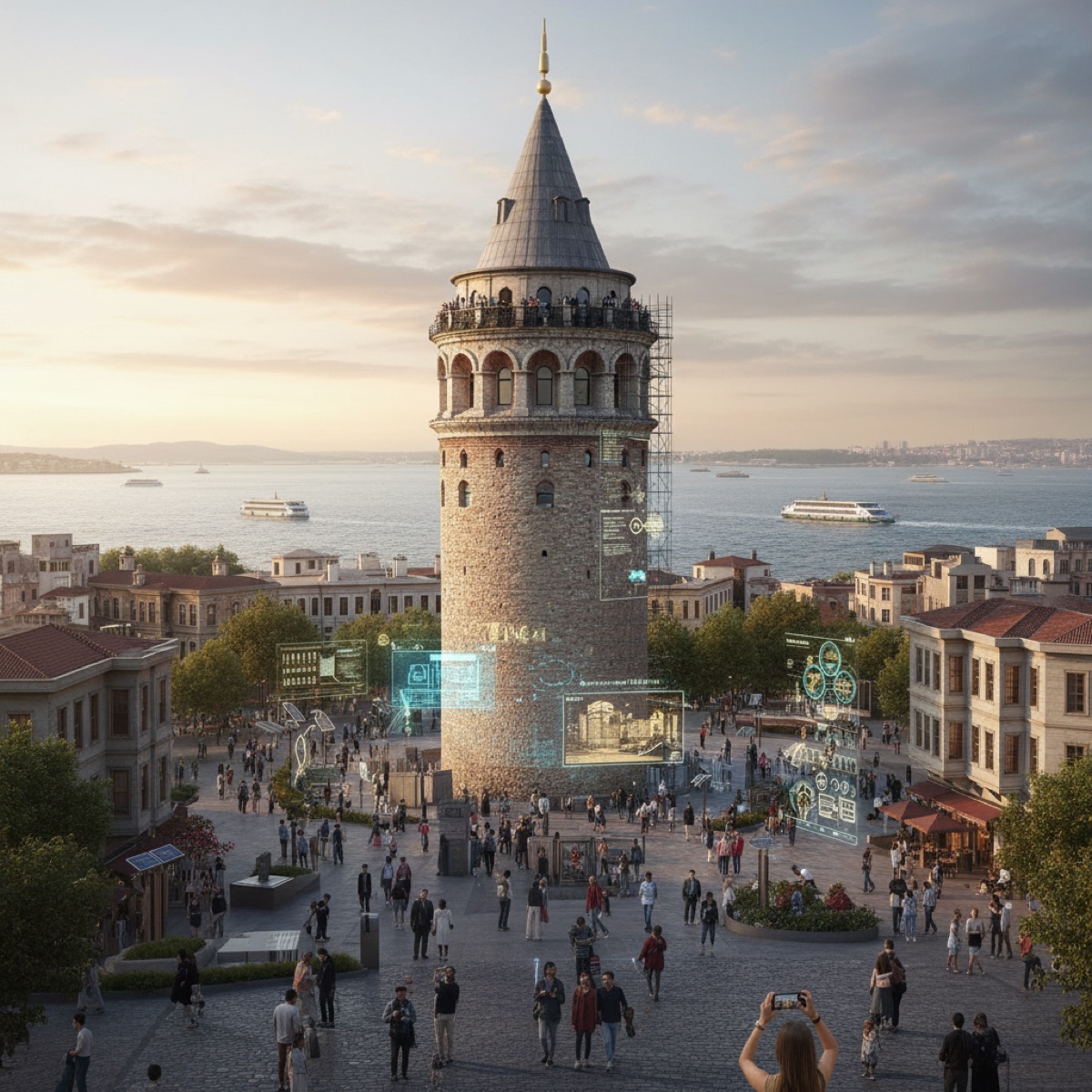
The Galata Tower, one of Istanbul's unique structures that has defied time for centuries and left its mark on the city's skyline, has witnessed many changes and transformations from the past to the present. The careful interventions carried out throughout history, especially the Galata Tower restoration works, have played a major role in keeping this iconic building robust. As we arrive at Galata Tower Restoration in 2026, looking back at the tower's history, we clearly see that these restorations are not just structural repairs, but also carry the mission of preserving cultural heritage and passing it on to future generations.
In 2026, the tower continues to inspire, serving as a prominent hub for digital media and cultural experiences, embodying an art laboratory for contemporary expression. The ongoing efforts for Galata Tower Restoration in 2026 ensure its continued relevance and structural integrity.
The Deep-Rooted History of Galata Tower and the Need for Restoration
The Galata Tower has a deep-rooted history, dating back to approximately the 6th century with its first known construction, and then to the 14th century with its reconstruction by the Genoese. During this long period, it hosted different civilizations and was used for various purposes. For such an old and important structure to survive, it required not only regular maintenance and repairs but also comprehensive restorations. Earthquakes, fires, and natural wear and tear throughout history made Galata Tower restoration work inevitable. The importance of Galata Tower Restoration in 2026 cannot be overstated, as it builds upon centuries of preservation efforts.
Galata Tower from the Genoese Period to the Ottoman Empire
Rebuilt by the Genoese in 1348 under the name "Tower of Christ," the Galata Tower was used for both defense and observation due to its strategic location. After the Ottoman conquest of Istanbul, the tower took on various functions such as an artillery barracks, a lighthouse, and a fire observation tower. In every period, interventions made while preserving the authentic character of the structure have carried the tower to the present day.
Reconstruction After Fires and Earthquakes
The Galata Tower suffered many fires and earthquakes throughout its history. Especially the damages after Hezarfen Ahmet Çelebi's flight attempt in the 17th century, the great fire in the 18th century, and the earthquakes in the 19th century caused significant destruction to the tower. The comprehensive repair and strengthening works carried out after these events played a vital role in the tower's survival. Each repair can actually be considered a type of Galata Tower restoration.
Recent Galata Tower Restoration Processes and Their Importance
In the mid-20th century and especially in the 21st century, the Galata Tower has been meticulously addressed with modern restoration techniques. The works in this period aimed to ensure the structural integrity of the building and to make it safe and accessible for visitors while preserving its historical texture. As we reach 2026, the current state of the Galata Tower is an indicator of the success of these restorations. The ongoing commitment to Galata Tower Restoration in 2026 highlights its enduring cultural significance.
The Comprehensive Restoration of the 1960s
In the 1960s, when the tower was planned to be opened to civilian visits, a comprehensive Galata Tower restoration project was carried out by Hayati Tabanlıoğlu. Within the scope of this restoration, the ground floor of the tower was arranged, the observation deck was renewed, and an elevator was added for visitors to facilitate access. This intervention became an important turning point in making the tower a tourist attraction.
2020 Restoration: Balance of Preservation and Modernization
The restoration, initiated by the General Directorate of Foundations in 2020 and which created a great stir, aimed to preserve the historical texture of the tower and at the same time increase its earthquake resistance. In this restoration, illegal additions on the tower were removed, wooden components were strengthened, and a general maintenance and repair was carried out. The works carried out with modern techniques hold an important place in the history of Galata Tower restoration.
- Structural reinforcement works, contributing to the tower's engineering marvel and earthquake resistance.
- Roof and facade repair
- Interior arrangements
- Interventions focused on preserving cultural heritage
Galata Tower Architecture and Unknowns
The cylindrical body and conical roof of the Galata Tower are an impressive example of Gothic architecture. The stonework and engineering skills used in the construction of the building are quite remarkable considering the technological possibilities of the period. Each floor of the tower is full of details telling a different story. Especially the unique panoramic view of Istanbul from the observation deck attracts thousands of tourists every year. Many artists find inspiration from above, through the eyes of painters, poets, and contemporary artists who capture its essence. The continuous need for preservation ensures that future generations can also appreciate this marvel, making Galata Tower Restoration in 2026 a critical endeavor.
Interior Arrangements of the Tower
Inside the Galata Tower, there are exhibitions providing visitors with information about the tower and Istanbul's history, souvenir shops, and a cafe. Thanks to restorations, these areas have been made more modern and functional. The interior structure of the tower offers visitors both a historical journey and a comfortable experience with modern amenities.
Floors and their functions in the tower:
- Ground Floor: Historical information and exhibitions
- Intermediate Floors: Various exhibitions and stairs
- Restaurant and Cafe Floor: Scenic dining area (former use)
- Observation Terrace: 360-degree view of Istanbul
Different Uses of Galata Tower
Throughout its history, the Galata Tower has served many different purposes. It was first built as a defense tower, then used as an observation tower, fire tower, observatory, and even a dungeon. In 2026, it mainly serves as a museum and observation deck, welcoming history and culture enthusiasts. This multifaceted use demonstrates how flexible and adaptive the tower is. Galata Tower restoration projects have also included adaptations suitable for these different uses, ensuring its continued relevance as a UNESCO World Heritage site. Its role as a cultural beacon is further cemented by its continuous influence on artistic expression, from the classical to the contemporary, attracting global attention and inspiring visitors from all walks of life as documented by National Geographic. The ongoing Galata Tower Restoration in 2026 ensures these diverse uses can continue.
Current Status of Galata Tower and Preservation of Cultural Heritage 2026
Today, as of 2026, the Galata Tower attracts the attention of the whole world as an important cultural asset on the UNESCO World Heritage Tentative List. Thanks to diligent Galata Tower restoration works, the tower has both preserved its structural soundness and is being transferred to future generations without losing its historical and cultural value. Here, visitors have the opportunity to trace the breathtaking view of Istanbul, as well as centuries of history and a strong cultural heritage. The commitment to Galata Tower Restoration in 2026 is a testament to its enduring legacy.
Sustainable protection and maintenance policies are of great importance for the future of the tower. Regular inspections, periodic maintenance, and new restoration projects when necessary will ensure that this unique structure stands for eternity. The Galata Tower is more than just a structure; it is a living symbol of Istanbul's identity and history. The continuous efforts in Galata Tower Restoration in 2026 are vital for its future.
This blog post aims to be a comprehensive guide for visitors by providing detailed information about the history, architecture, different uses, and especially the restoration processes of the Galata Tower.