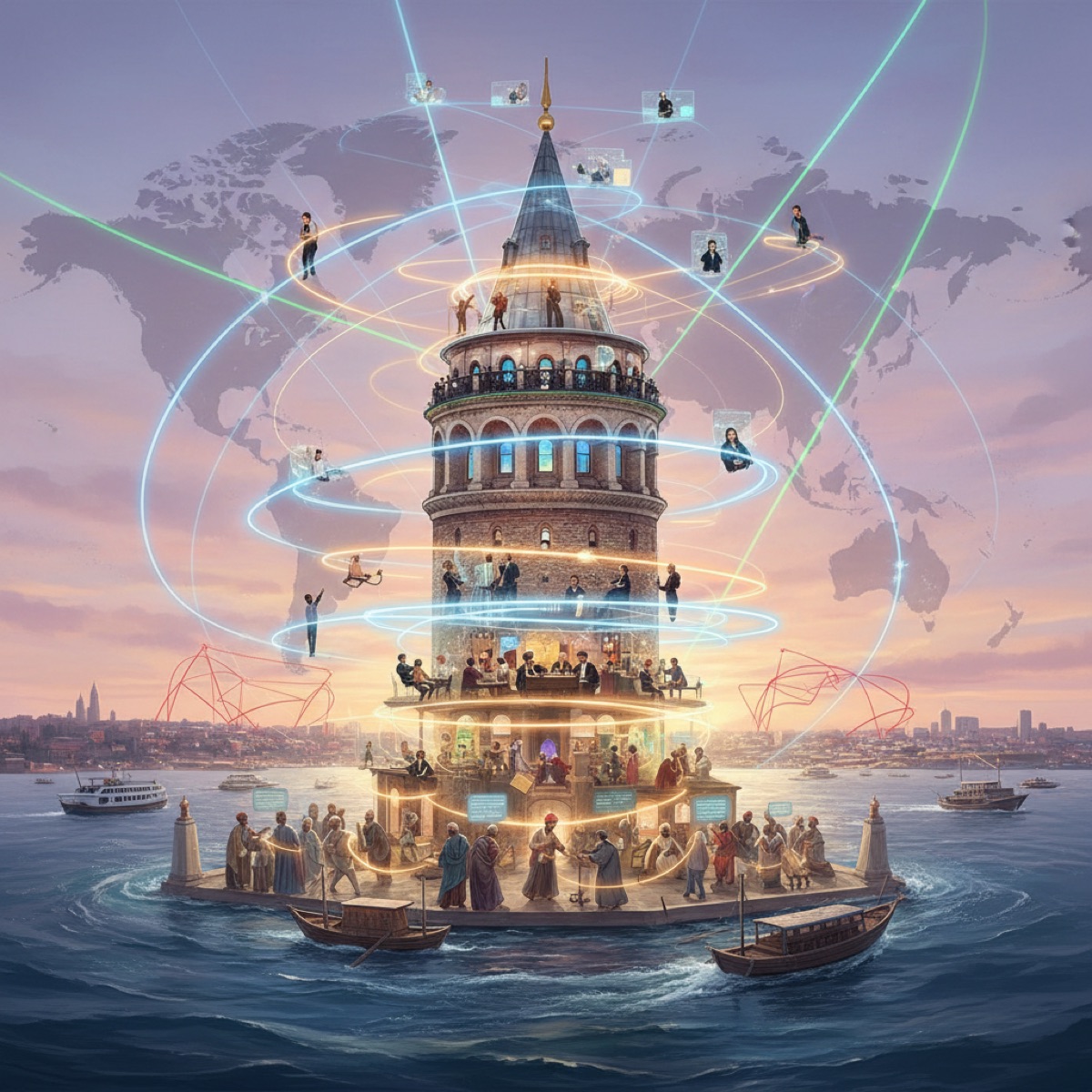
Standing tall for centuries in the heart of Istanbul, the Galata Tower Art is not just a historical structure, but also a living work of art that has inspired countless artists. Today, when the Galata Tower is combined with the concept of art, it becomes one of the iconic places that best reflects the cultural fabric of the city. Furthermore, the artistic relationship runs deep. In this article, we will discuss the deep connections of Galata Tower Art from past to present, its journey from the painters' brush to today's digital art applications, and the unknown art routes that tourists can discover as of 2026. This exploration of Galata Tower Art offers a unique perspective on Istanbul's cultural heritage.
Galata Tower Art and its Historical Texture
This unique structure, with history in every corner, has been a guardian of Istanbul, which has hosted many civilizations for centuries. Its story, extending from the Genoese to the Ottomans, and from there to the Republican era, has always been an attractive subject for artists. Therefore, its role in Galata Tower Art is undeniable. The tower not only offers a visual feast but also, with its narrow streets, historical inns, and architecture, is a unique source of inspiration as a whole. For more on the tower's enduring presence, explore Galata Tower: Centuries of Silent Resilience, and see how it continues to inspire Galata Tower Art.
Construction and Architectural Development of the Tower
Built by the Genoese in 1348 under the name "Tower of Christ," the Galata Tower was used as part of the city walls during the Byzantine period. This impressive Gothic-style structure later underwent many restorations during the Ottoman era to reach its current form. Especially the repairs after the earthquake in the 16th century and the additions after the fire in the 18th century added different layers to the tower's architecture, making it a subject of continuous artistic interpretation and contributing to the legacy of Galata Tower Art.
Purposes of Use of Galata Tower in Different Periods
- Defense Tower: It was initially the most important tower of the Genoese trade colony's defense walls.
- Watchtower: Its use for fire surveillance was vital for the security of Istanbul.
- Observatory: It was used for a short period for astronomical studies.
- Prison: It also served as a cell for short-term arrests.
- Tourism and Culture Center: Today, it is one of Istanbul's most popular tourist attractions, contributing significantly to Galata Tower Art.
Galata Tower Art Through the Eyes of Painters: From Classical Art to the Present
The Galata Tower has inspired countless painters throughout history. Accordingly, many artists, from classical Turkish painting to Western orientalist painters, have transferred this unique structure onto their canvases. The depiction of the tower from different angles and under different lighting conditions allowed artists to add their personal interpretations. These works are valuable documents that convey not only the image of the tower but also the Istanbul of that period and its way of life, enriching the narrative of Galata Tower Art.
Galata in the Works of Orientalist Painters
Western orientalist painters who came to Istanbul in the 19th century frequently used the Galata Tower in their works. Artists such as Jean-Léon Gérôme and Osman Hamdi Bey depicted the tower as part of an exotic natural and historical landscape. These paintings significantly contributed to the international recognition of the tower and its place in global art, making it a key element of Galata Tower Art.
Legendary Depictions by Turkish Painters
For Turkish painters, the Galata Tower has also been an indispensable motif. From Fikret Mualla to Bedri Rahmi Eyüboğlu, from İbrahim Çallı to Nazmi Ziya Güran, many important Turkish artists have interpreted the different atmospheres, symbolic meanings, and place of the tower in the Istanbul skyline in their own styles. These works are important legacies of Turkish painting art and further reinforce the Galata Tower Art relationship.
Digital Art and Galata Tower Art Experience in 2026
In today's digital age, Galata Tower Art is acquiring new and exciting dimensions in its encounter with art. Especially as of 2026, digital art installations supported by augmented reality (AR) and virtual reality (VR) technologies are offering unforgettable experiences to visitors of the tower. This fusion truly revolutionizes the visitor experience, showcasing the evolution of Galata Tower Art. For insights into the tower's lesser-known aspects, consider reading about Galata Tower: An Unknown Water Tower.
Mysteries of Galata Tower with Augmented Reality
Through smartphone applications and AR glasses, visitors can digitally revive the tower's different periods, historical events, and legends. For example, thanks to an AR application, it is possible to experience Hezarfen Ahmet Çelebi's legendary flight from the top of the tower in the 17th century almost moment by moment. This interactive experience deeply enriches Galata Tower Art for modern audiences. For current trends in digital art integration in historical sites, see this Smithsonian Magazine article on digital art in historic sites, which highlights the innovative spirit of Galata Tower Art.
Time Travel with Virtual Reality
VR areas created inside or around the tower offer visitors the opportunity to go back in time. Being a vibrant part of a Genoese era feast or watching Istanbul from the perspective of a fire observer during the Ottoman period is no longer just a dream but an experience that has become reality with 2026's technology. This is a unique example where Galata Tower Art and technology are seamlessly blended, offering new dimensions to the understanding of Galata Tower Art.
The Artistic Heart of Istanbul: Galata Tower Art in its Surroundings
As much as the magnificent structure of the Galata Tower, the area around it known as "Galata Village" still holds a treasure waiting to be discovered by artists. Workshops in narrow streets, boutique art galleries, and graffiti works adorning the walls of historical buildings have transformed this area into a true open-air art museum. A trip focusing on the Galata Tower Art theme encompasses this area as much as the tower itself, revealing the vibrant artistic pulse of the city.
Hidden Art Workshops and Galleries
Along the route from Perşembe Pazarı to Serdar-ı Ekrem Street, there are many art workshops and contemporary art galleries hidden within small passages. These places are ideal addresses where young and talented artists exhibit their work and art lovers can discover original pieces. Many artists create their own works inspired by the majestic appearance of the tower, making it a cornerstone of local Galata Tower Art. To learn about other artisans from the Tower's history, explore Galata Tower: A Cradle of Unknown Artisans, further enriching the story of Galata Tower Art.
Street Art and Graffiti Culture
Galata's colorful streets are also a street art paradise. Eye-catching graffiti, stencil works, and mosaic pieces drawn on the walls reflect the dynamic art spirit of the region. These works often contain social messages, and sometimes simply appear as an aesthetic form of expression. For those on a Galata Tower Art tour, these streets offer all forms of art at the foot of the tower. For a broader view on urban art, consider this Guardian gallery on global street art trends in 2026, showcasing the diverse expressions of Galata Tower Art.
Galata Tower's Place in Cultural Events and Modern Art
Hosting thousands of local and foreign tourists every year, the Galata Tower also hosts many cultural events. As of 2026, especially open-air concerts, short film screenings, and lighting performances organized during the summer months further strengthen the tower's connection with art. Thus, its role in Galata Tower Art extends far beyond its physical presence, embracing contemporary artistic expressions.
Light and Sound Shows: Living Stories at the Tower
At night, the outer facade of the tower transforms into a canvas with special projection mapping techniques. Light and sound shows narrating Istanbul's history, legends, and cultural diversity offer a visual feast to visitors. These shows prove that the tower is not just a pile of stones but also a living storyteller. These unique shows are an important part of the Galata Tower Art experience. You can find more information about projection mapping at historical sites on Projection-Mapping.org, illustrating the innovative ways Galata Tower Art is presented.
Literature and Galata Tower Art
The Galata Tower has frequently found its place in literary works. Many writers and poets, from Orhan Pamuk to Elif Şafak, from Yahya Kemal Beyatlı to Attila İlhan, have written unforgettable works inspired by the romantic and mysterious atmosphere of the tower. The tower carries different meanings in literature as a meeting point for lovers, a witness to separations, or a symbol of loneliness, further cementing its role in culture and Galata Tower Art.
In short, the Galata Tower has been not only a watchman for centuries but also a muse, an artist's canvas, and a cultural ambassador. In 2026, it offers its visitors not only a historical journey but also a comprehensive Galata Tower Art experience, ranging from classical painting to digital installations, from street art to literary interpretations. For every tourist visiting Istanbul, discovering this artistic aspect of the tower will be the key to understanding the soul of the city more deeply. This truly encompasses the full scope of Galata Tower Art, making it a must-see for art enthusiasts and history buffs alike.