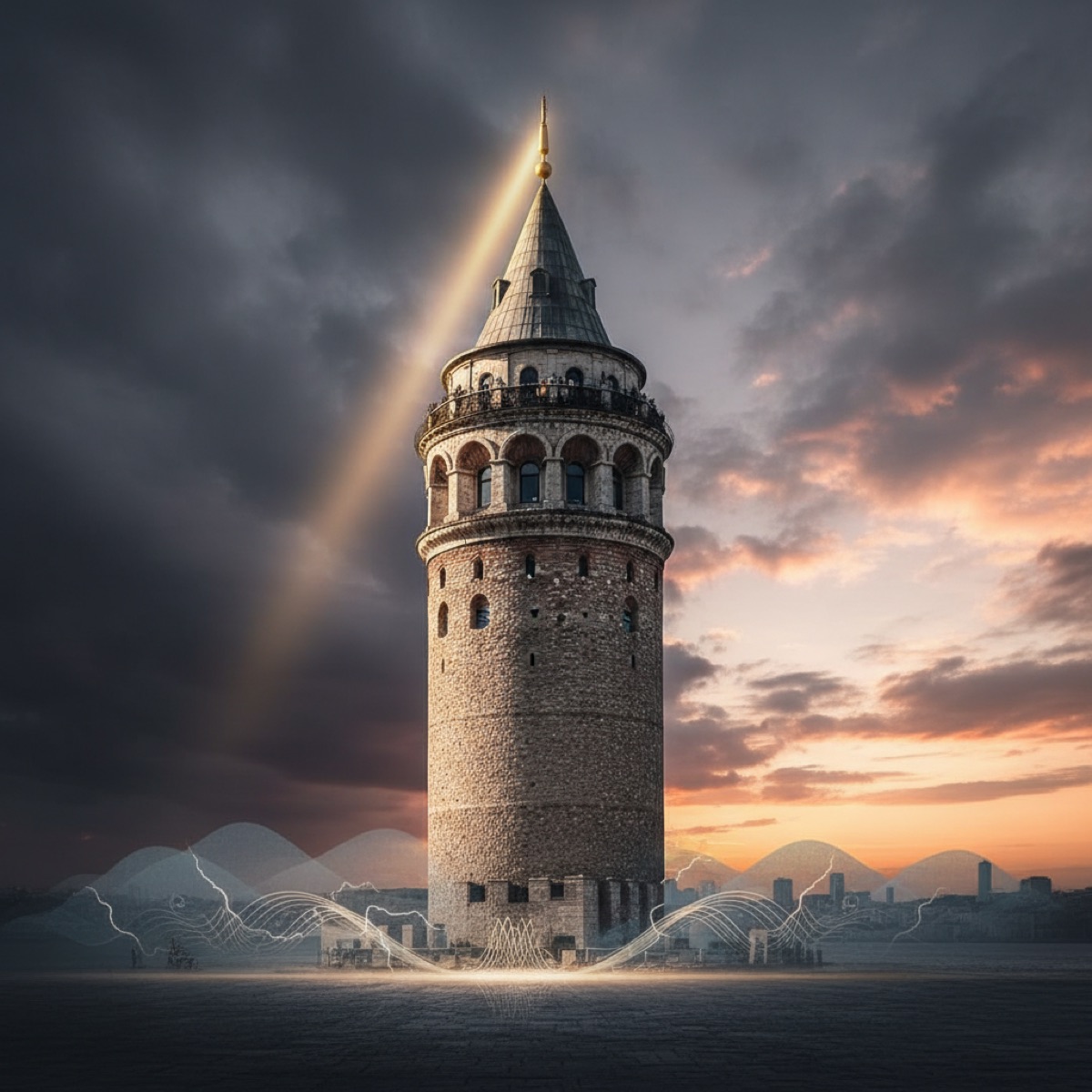
An indispensable part of Istanbul's skyline, the Galata Tower is an iconic structure that has stood for centuries, enduring all the tests of time and nature. Especially the Galata Tower earthquake resistance is an inspiring engineering topic that both local and foreign tourists and history enthusiasts frequently wonder about. As of 2026, considering factors such as increasing natural disaster risks and global warming, the question of how such an ancient structure has remained so resilient against earthquakes becomes even more significant. This article delves into the remarkable Galata Tower Earthquake Resistance in 2026, exploring its historical resilience and future outlook.
For more insights into its storied past, explore Galata Tower: Secrets and Legends of History.
History and Architectural Evolution of Galata Tower
The history of the Galata Tower has roots going back to the Roman period, but it took its current known form in 1348 by the Genoese under the name "Tower of Christ." There are also some rumors that it was used as a wooden lighthouse during the Byzantine period. Thanks to its strategic location, the tower has been used for many different purposes throughout history. Its enduring presence is a testament to the initial design's foresight regarding Galata Tower Earthquake Resistance in 2026.
Genoese Period and Construction
The tower was built as an important part of the Genoese colony's defense system. During this period, solid stonemasonry and thick walls provided the basic durability of the structure. Built with the engineering knowledge of its time, this structure has formed a foundation resilient to earthquakes for years.
Ottoman Period and Restorations
After the conquest of Istanbul, the tower came under the control of the Ottoman Empire and was repaired and restored by sultans at various times. Especially during these renewals made after fires and earthquakes, the original character of the building was preserved, and the Galata Tower earthquake resistance was further increased. After the first repairs made during the reign of Fatih Sultan Mehmet, it generally functioned as a watchtower and fire tower.
Galata Tower Earthquake Resistance: Structural Analyses
The Galata Tower earthquake resistance is a subject of study for modern engineers as to how it has stood for so long without contemporary construction techniques. The unique architecture of the tower and the materials used form the basis of this durability. Especially Istanbul's location in a geography frequently shaken by earthquakes further emphasizes this characteristic of the tower. Discover more about its resilience in Galata Tower: More Than a Viewpoint, A Silent Witness to Centuries. Understanding the factors contributing to Galata Tower Earthquake Resistance in 2026 is crucial for preserving such historical marvels.
Foundation Structure and Material Selection
In the construction of the tower, high-quality and robust stones suitable for environmental conditions were used. The special techniques in preparing the mortar and the way the stone blocks interlocked provided the structure with monolithic integrity. This increased its resistance to external factors. The depth and width of its foundation also played a critical role in providing stability against ground movements.
Geometric Shape and Weight Distribution
The cylindrical form of the tower has the advantage of distributing horizontal forces evenly during an earthquake. In addition, the tower's tapering structure from bottom to top helped it maintain a more balanced stance against tremors by optimizing its center of gravity. This architectural feature provides a natural advantage for the Galata Tower earthquake resistance.
- Thick and dense wall structure
- Circular cross-section architectural design
- Constructed in proportions close to the golden ratio
- Durability of the used stones
Contemporary Structural Strengthening Works and Future of Galata Tower Earthquake Resistance
Even in the 2020s and 2026, the protection and strengthening of historical structures are of great importance. The Galata Tower also sets an example in this regard. Past and present restoration works play a key role in passing the tower down to future generations. The ongoing efforts ensure the continued Galata Tower Earthquake Resistance in 2026 and beyond. Learn more about urban preservation efforts in Istanbul from Istanbul Governorship Official Website.
Modern Restoration Techniques
In recent restoration works, modern engineering approaches aimed at increasing the Galata Tower earthquake resistance have been adopted while preserving the structural integrity of the tower. These works include strengthenings in accordance with current earthquake regulations without disturbing the historical fabric. For example, by renewing joints, repairing cracks, and conducting detailed ground surveys, it was aimed to increase the tower's resistance to possible tremors.
Continuous Monitoring and Maintenance
The preservation of historical heritage is not limited to large-scale restorations. Continuous monitoring systems and regular maintenance programs are applied for important structures like the Galata Tower. These programs enable early detection and intervention of possible wear and tear that may occur over time. In this way, the goal is for the tower to stand for thousands of more years, maintaining its impressive Galata Tower Earthquake Resistance in 2026.
Unknowns and Legends of Galata Tower
The history of the tower also contains many legends and interesting stories. These stories reinforce the mystical atmosphere of the tower and elevate it beyond just a structure. For tourists, these legends are important elements that enhance the tower's appeal, alongside its remarkable Galata Tower Earthquake Resistance in 2026.
Hezarfen Ahmed Çelebi and Flight with Wings
The rumor that Hezarfen Ahmed Çelebi, one of the important figures in Turkish aviation history, flew from the Galata Tower to Üsküdar with wings he made himself in the 17th century, is one of the most well-known legends. This event showed that the tower was not only an observation point but also a starting point for dreams and science. For more on historical engineering feats, see the American Society of Civil Engineers website.
Love Legend and Eternal Devotion
According to a legend, there is an unrequited love between the Galata Tower and the Maiden's Tower. No one knew the love between the Maiden's Tower standing in the middle of the Bosphorus and the Galata Tower looking down from the hill. Only the gulls and fish who knew the currents in the Bosphorus back then knew. This legend also contributed to the tower becoming a romantic symbol.
Why is Galata Tower Important for Tourism?
The Galata Tower is one of Istanbul's most visited tourist attractions and a unique focal point for local and foreign tourists. Both its historical fabric and its panoramic city view make it indispensable. In 2026, the tower continues to be one of the locomotives of Istanbul tourism, partly due to its historical significance and the marvel of its Galata Tower Earthquake Resistance in 2026. For global trends in heritage tourism, refer to the UN World Tourism Organization.
Panoramic City View
The 360-degree view of Istanbul from the top of the tower offers a captivating experience, especially at sunset. This view, where the Bosphorus, Golden Horn, Historical Peninsula, and modern city fabric merge, also provides unique photo opportunities for photography enthusiasts. Visitors can better understand the grandeur and rich history of the city from this point.
Cultural Events and Museum Experience
Today, the Galata Tower also serves as a museum. It contains exhibitions, documentaries, and interactive experiences telling the history of the tower. It also hosts cultural events from time to time, offering visitors a different experience. These events increase the tower's capacity to attract visitors.
- Awareness of cultural heritage
- Historical and architectural value
- Being a symbol of the city
- Past full of legends and stories
In conclusion, the Galata Tower is more than just a structure; it is a marvel of engineering that has stood for centuries, defying natural disasters and time. Especially the Galata Tower earthquake resistance shows that it is not only a work of art but also a triumph of science and human perseverance. In 2026, the tower continues to illuminate the history and future of Istanbul in all its glory, a testament to its enduring Galata Tower Earthquake Resistance in 2026.